

Obsidian walls were world-center markers
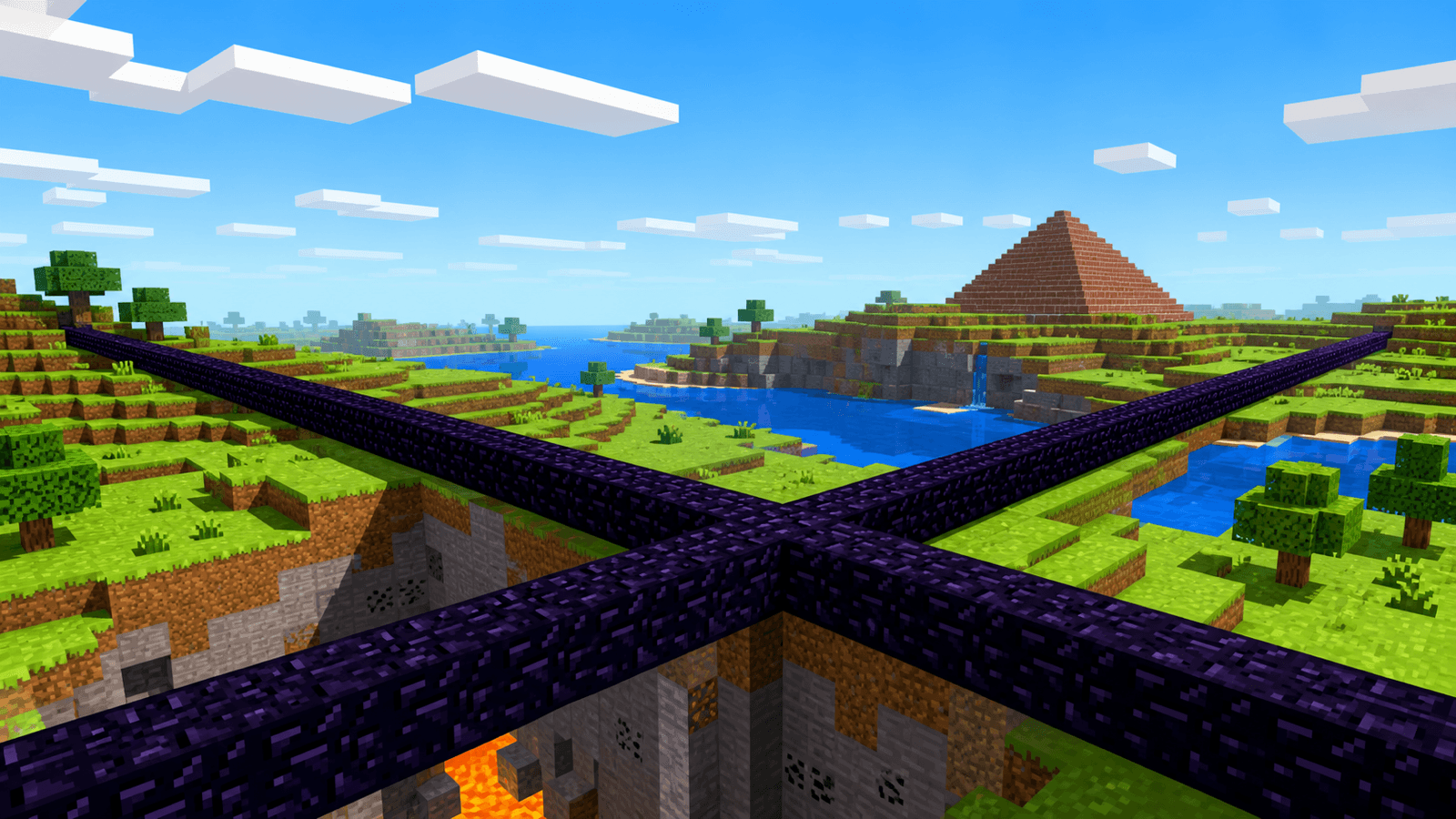
The old obsidian wall was not a fort, a Nether hint, or a player-built ruin. The current Minecraft Wiki Obsidian Wall page describes it as an experimental, short-lived debugging structure from early Infdev. Its rule was stark: replace solid blocks where X or Z equaled 0, lift the wall two blocks above terrain, and let the two lines cross at the center of the world.
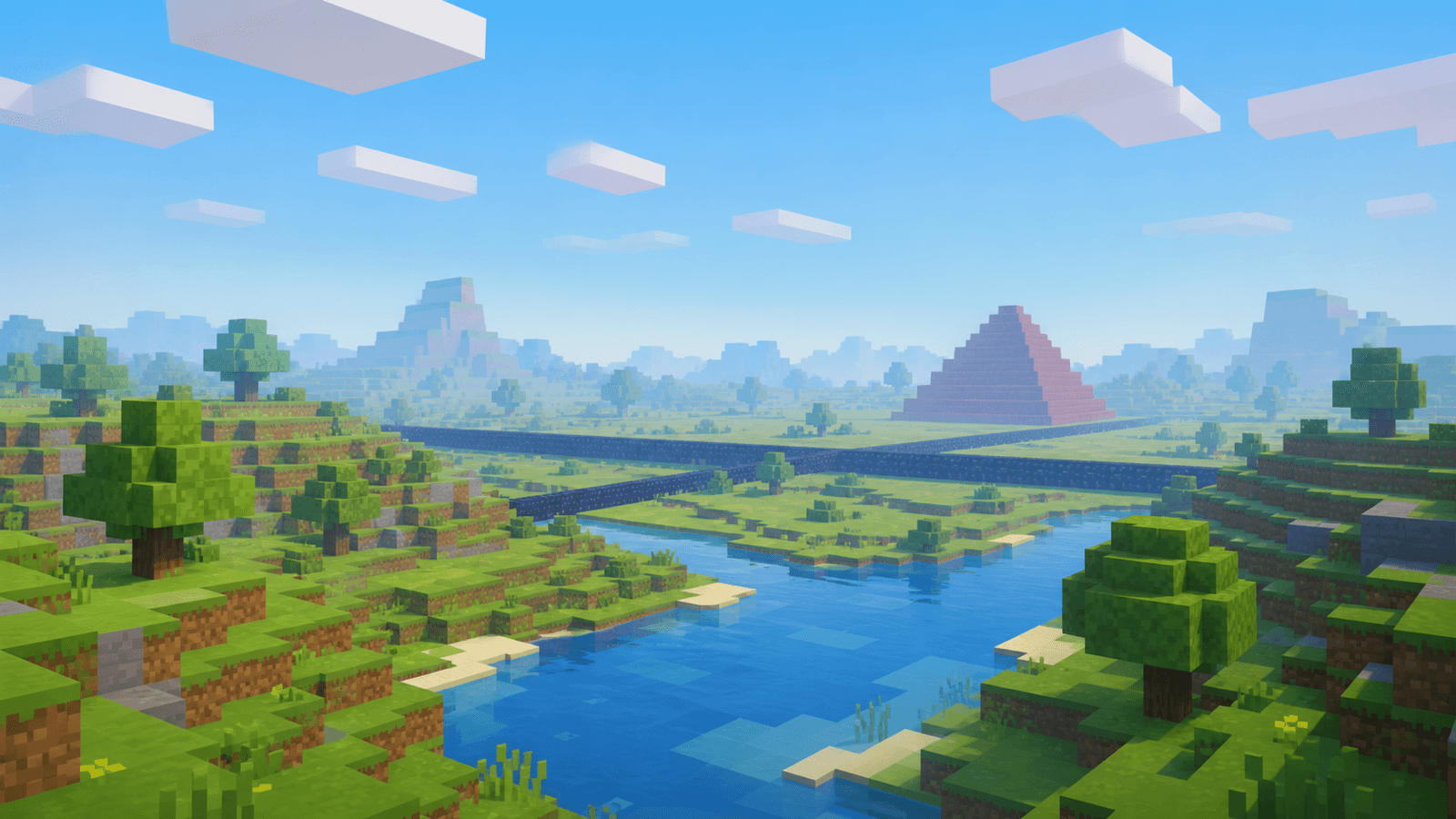
That made the wall more like a coordinate crosshair than a generated attraction. In Infdev 20100227-1414, the player spawned where the two walls intersected at 0,0. The visible part stood only two blocks high above the ground, but the wall continued down through replaced stone, dirt, and grass. It could climb hills, cut through water, and read as a black seam across the landscape because the terrain was being used to test a new kind of world scale.
For vanilla Minecraft servers, that detail matters because the wall is not a generic "old Minecraft" prop. A genuine wall points to a narrow Infdev window. A modern wall points to a recreation, import, command build, datapack, or museum project. Those can all be fun, but they are different promises.
Infdev was testing scale, not finished landmarks
Infdev followed Indev when Minecraft moved toward procedural worlds that could feel effectively infinite compared with the old fixed maps. The Minecraft Wiki Infdev overview frames the phase as the rewrite that brought Minecraft closer to modern terrain logic, with early test structures including brick pyramids and obsidian walls. That context keeps the wall from sounding more polished than it was.
The wall was added on February 27, 2010 and removed on March 13. That two-week span is the key fact. It was part of phase-one Infdev experimentation, not a structure family that slowly evolved into villages, strongholds, or ruined portals. It existed while terrain, saving, chunk handling, and structure experiments were changing quickly.
Brick pyramids are the natural comparison. Minecraft.net's official Block of the Week article on bricks notes that huge brick pyramids briefly generated during pre-Alpha Infdev before being removed. The Minecraft Wiki brick pyramid page goes deeper: they were solid, predetermined, and originally used to test large structure generation. Together, the obsidian wall and brick pyramid show a moment when Minecraft's world was becoming huge before its generated landmarks had modern gameplay roles.
Why players still remember the wall
The wall survives because it is visually obvious. A two-axis obsidian cross at spawn is easier to remember than a subtle terrain bug. Community posts still reference it when players revisit Infdev, recreate old structures, or build historical survival projects. One r/Minecraft thread about running Infdev 20100227 is not about the wall directly; it is about the difficulty of getting that old build to work at all, including wrappers, launcher quirks, and crashes. That is exactly the kind of friction a preserved old-world claim hides.
Other community examples show the wall as a building challenge. A r/Minecraftbuilds post described a survival multiplayer project recreating the Infdev obsidian wall in Bedrock. The comments treated it as a recognizable historical object, but also asked what made it special. That gap is useful: nostalgia often reaches farther than shared knowledge.
The same problem appears around brick pyramids. Golden Age Minecraft players discuss finding them in evolution worlds, preserving chunks, and working around old-version limitations. Those conversations are practical, not just sentimental. Old landmarks depend on runnable jars, generated chunks, save compatibility, and later migration choices.
What it means for server selection
If you are comparing vanilla Minecraft servers on the homepage server list, Infdev landmarks are a useful honesty test. A listing that says "old world" or "historic terrain" should explain what that means. Did the map start in an old jar? Were only a few museum chunks imported? Does the survival world still generate modern terrain? Are historic areas protected? Can new players visit them without private coordinates?
Those questions matter because "vanilla" can describe several different experiences. Current vanilla with a museum area is different from old-version survival. A strict current server with hand-built replicas is different from an archival map. A semi-vanilla server with commands, imports, or datapacks may still be a good community, but it should not rely on the word vanilla to blur those choices.
The obsidian wall also connects to modern obsidian expectations. Today, obsidian is a hard, blast-resistant block used for portals, End platforms, End spikes, ruined portals, builds, and multiplayer defense. The wiki's current obsidian page even notes its common server use as protection against griefing. That is not the same meaning as an Infdev debug wall. The same material can signal survival effort in a current world and development history in an old one.
Better questions before joining
The strongest server listings translate nostalgia into mechanics. Instead of asking whether a server "has obsidian walls," ask whether the world is current vanilla, old-version survival, archived terrain, or custom historical recreation. Ask whether the owner can name the generating version. Ask whether new chunks match the advertised terrain. Ask whether old landmarks are playable survival space, protected museums, or decorative spawn builds.
This is the same reading habit that helps with brick pyramids, monoliths, and other entries in the Minecraft history archive. Removed features are interesting because they reveal how Minecraft changed. For server shoppers, their job is more practical: they expose whether a community can describe its own map clearly.
The best vanilla Minecraft servers make those answers easy to find. They do not need an Infdev wall to be worth joining. They need clear rules, clear version history, and a map promise that matches what players will actually experience after spawn. Obsidian walls are memorable because they marked the center of an unfinished infinite world; today, they are most useful as a reminder to read every old-world claim with coordinates, versions, and evidence in mind.