
26.23 is a Bedrock hotfix signal
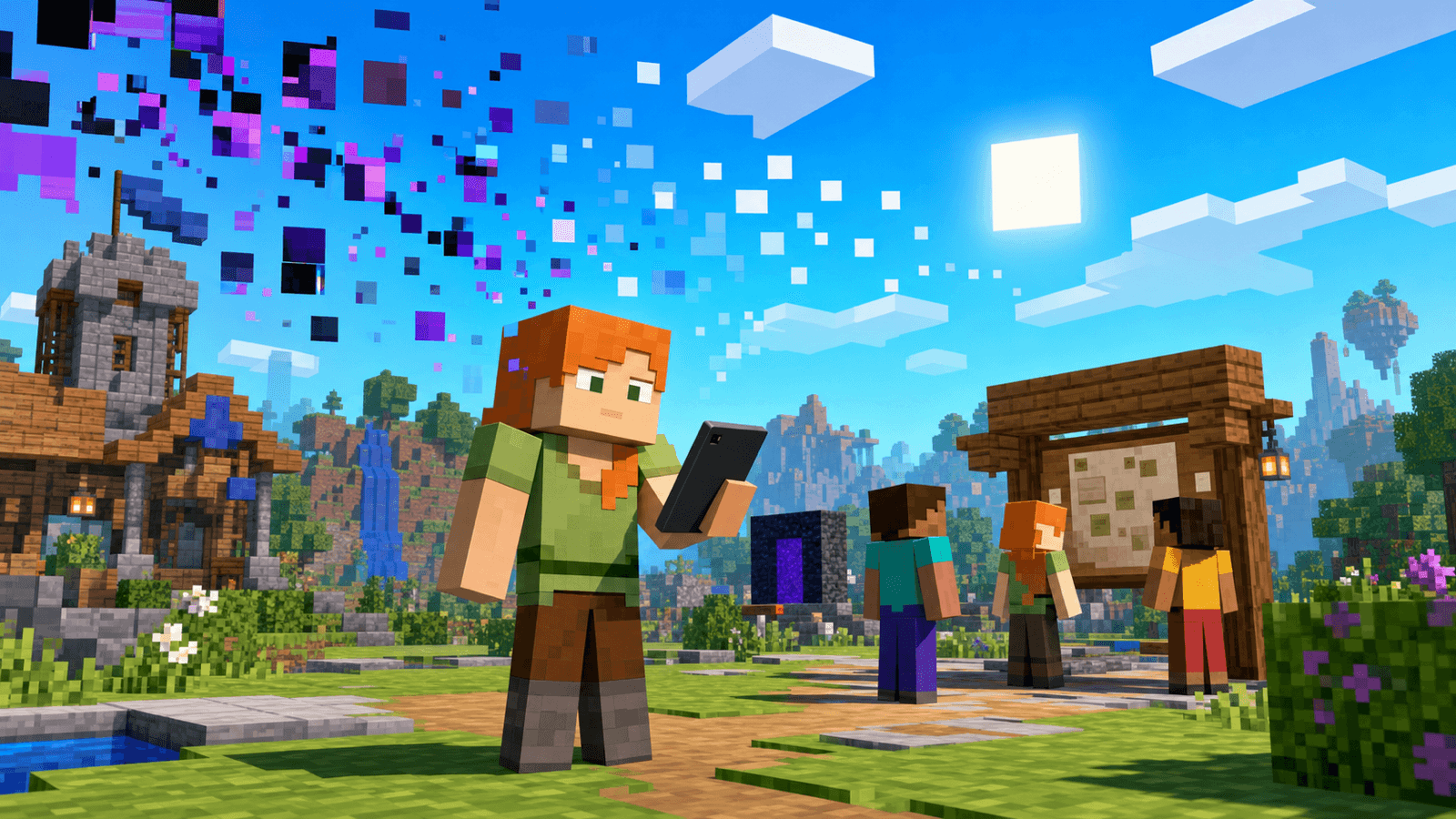
Minecraft: Bedrock Edition 26.23 was posted by Mojang on May 21, 2026 as a hotfix for Android and Realms. The official notes are short: the rollout was platform-dependent, the fixes targeted black squares with Vibrant Visuals on some Android devices, and Mojang also fixed several gameplay crashes. That is not a new progression system, mob, block family, or survival rule.
That small scope is exactly why the update matters for vanilla Minecraft servers. Hotfixes do not usually change the way a survival world should be played, but they can change whether players can comfortably join, see the world correctly, or trust that tonight's session will be stable. A version number that looks minor to an owner may be the difference between "everything works" and "my Android client is broken" for a player.
The queued source recorded Bedrock 26.23 as the latest Bedrock release at discovery time. By itself, that local snapshot explains why this title entered the queue. The live source check explains the article angle: 26.23 is a compatibility and confidence checkpoint, not a content pitch.
Android and Realms timing affect player expectations
Bedrock updates move through store and platform approval paths, and Mojang's hotfix language explicitly tells players to allow time for the update to reach them. For a server browser, that has a practical meaning: two friends may be looking at the same vanilla server while their clients are not in the same state yet. One may have 26.23, another may still be waiting, and a third may be using a device that shows the visual issue the hotfix is meant to solve.
The Vibrant Visuals context matters here because it is intentionally cosmetic. Minecraft's official page says Vibrant Visuals does not alter gameplay and that Realms can still be played with friends whether the option is enabled or not. That helps owners avoid overreacting. The server's vanilla mechanics did not change because a graphics hotfix shipped. But player comfort did change if visual artifacts or crashes were affecting them.
When you compare vanilla Minecraft servers on the homepage server list, look for listings that separate those ideas cleanly. "Vanilla survival rules" is one promise. "Bedrock 26.23 works for Android and Realms players today" is another. A good server page does not blur them together.
Server access issues are still part of the story
Community discussion around 26.23 shows why vanilla server pages need plain compatibility notes. The r/Minecraft hotfix thread mirrored the official Android and Realms language, but nearby player support threads were more concrete. One r/MinecraftHelp user on Android reported flickering and glitching at the start screen on Bedrock 26.23, even in a new world with no mods. Another Bedrock Dedicated Server owner reported that a long-running world stopped accepting connections after the 1.26.20-series updates, while a commenter pointed them toward a Mojang bug-tracker issue for a similar "Boat" error on Ubuntu.
Those reports do not prove one universal 26.23 failure. They show the shape of player confusion. When a patch lands near Android, Realms, rendering, crashes, and dedicated-server questions, players do not always know whether to blame their client, the Realm, a private host, an account issue, a crossplay layer, or the server owner.
For vanilla Minecraft servers, that uncertainty is enough reason to communicate. A server can be strict vanilla and still have operational details: Bedrock support model, update window, backup policy, whether Android users have reported issues, and where players should report join failures.
Owners should also avoid turning one hotfix into a panic restart. If the server is Java-only, 26.23 may mostly matter to Bedrock players who reach it through a proxy. If the server is native Bedrock, it may matter more directly. If the community uses Realms, the official Realms mention is relevant, but it still does not mean every private Bedrock server has the same behavior.
Server owners need a short hotfix ritual
The best response to 26.23 is a boring checklist. First, confirm which player group the hotfix affects: Android, Realms, native Bedrock, bridged Bedrock, or everyone. Second, test the join path before peak hours. Third, publish one short note that says what works, what is waiting, and when the next check happens. Fourth, avoid changing gameplay rules just because a client hotfix shipped.
This is especially important for long-term survival worlds. A minigame lobby can absorb a little confusion. A vanilla survival world depends on trust: farms, storage rooms, events, and shared builds all assume the server will handle updates calmly. If a player sees black squares, crashes during gameplay, or cannot connect after a Bedrock server update, they need a status note before they need a sales pitch.
Use 26.23 to choose clearer servers
The practical takeaway is simple. Minecraft 26.23 means vanilla Minecraft servers should make compatibility readable. Players should ask what version the server supports today, whether Bedrock access is native or bridged, and where update notices appear. Owners should answer those questions before players have to troubleshoot in chat.
This release also fits the pattern from nearby version-history posts such as Minecraft 26.22 and Minecraft 26.21: the smaller the hotfix, the more the article is about process. Good servers do not inflate patch notes. They turn them into clear expectations.
Use the blog for more update context, then return to the Minecraft server list with a sharper filter. Do not just ask who says "latest." Ask who explains updates well enough that you can trust the world with your time.