
26.21 is a hotfix, not a content drop
Minecraft: Bedrock Edition 26.21 was posted by Mojang on May 14, 2026 as a hotfix for issues found after the previous update. That framing matters. This is not a new biome, mob, structure, or progression system. It is a maintenance release that fixes a furnace freeze, several crash paths, a launch crash, a signed-out "Search for people" crash, and a block-traits problem tied to newer Bedrock format versions.
That does not make it irrelevant to vanilla multiplayer. It makes it a different kind of signal. Big content drops test a server's rule decisions. Hotfixes test its communication habits. A player does not need a long announcement for every minor patch, but they do need to know whether the server is ready for the version their device just installed.
There is one timing wrinkle worth naming. The queue captured 26.21 as the latest Bedrock release, and by this run date, May 21, 2026, Bedrock 26.22 had already appeared in the wider version stream. That does not invalidate 26.21. It makes the point sharper: Bedrock release status changes quickly, so vanilla Minecraft servers should avoid vague promises like "latest" unless they also show the exact version they support.
The server meaning is clarity
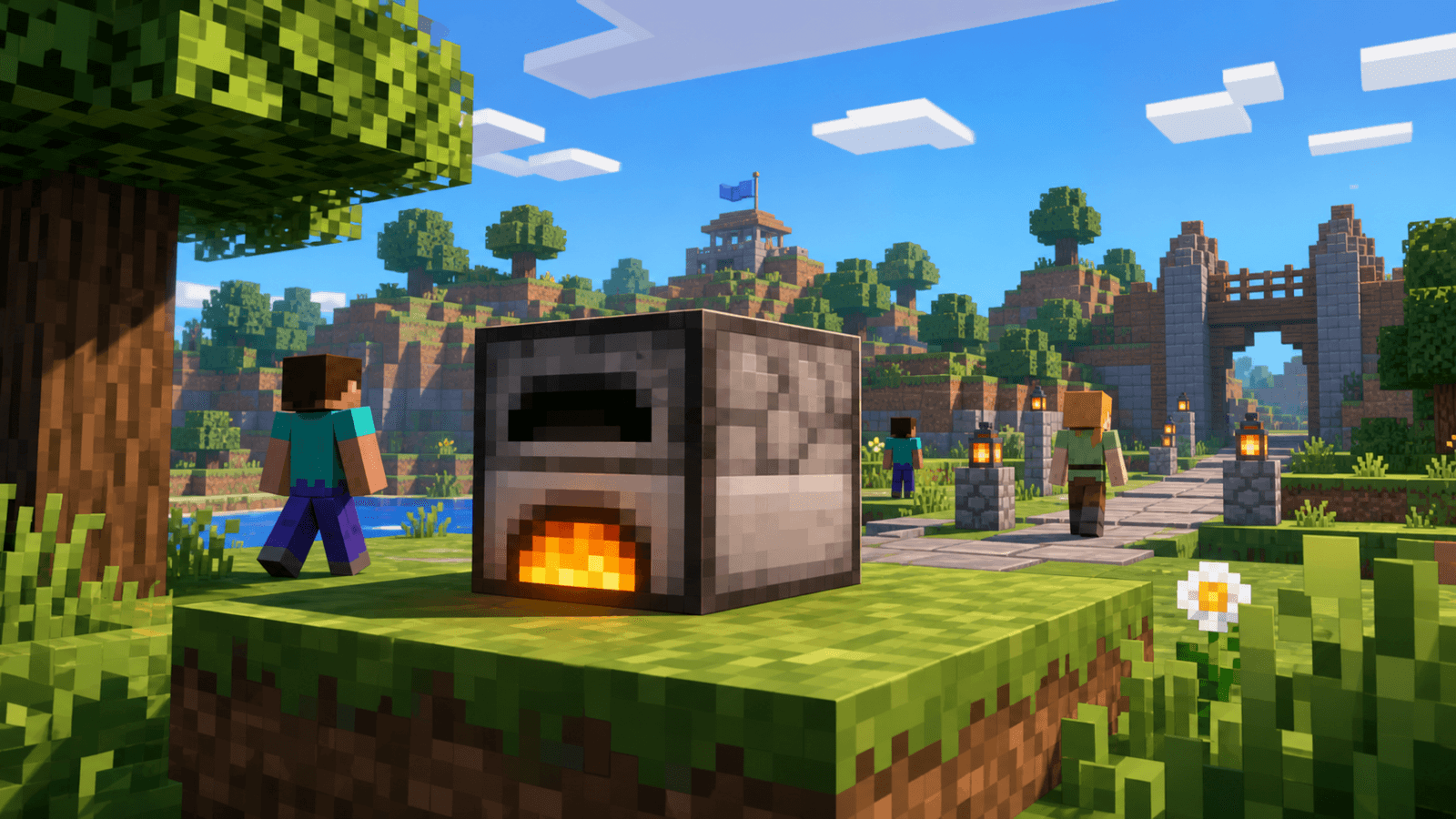
For ordinary survival players, 26.21's most visible fixes are stability and interface repairs. A furnace freeze sounds small until it blocks a normal early-game loop: smelting food, glass, stone, iron, copper, or charcoal. Crash and launch fixes are even simpler. If the client cannot stay open, the server experience never starts.
The server-selection lesson is not "join only servers that update instantly." It is "prefer servers that make their update posture legible." When browsing vanilla Minecraft servers, look for communities that list exact supported versions, distinguish Java from Bedrock access, and explain whether Bedrock players are joining a native Bedrock world, a Realm, or a Java server through a bridge.
That distinction matters because a patch can affect different parts of the stack. A Bedrock hotfix may be crucial for a console or mobile player while changing nothing about the mechanics of a Java-hosted survival world. A good server page or Discord note makes that separation obvious. A weak one leaves players wondering whether a failed join means their client is wrong, the host is stale, the bridge is outdated, or the platform rollout has not reached them yet.
Bedrock rollout is a player-experience issue
The official 26.21 notes say the hotfix becomes available on each platform as it is approved. That is familiar Bedrock language, but it has real multiplayer consequences. One player may update on Windows, another may still be waiting on a console store, and a third may have the update but still hit account or sign-in trouble.
Community discussion around 26.21 showed exactly that kind of friction. The r/Minecraft official-news thread repeated the changelog, then players reported PS5 sign-in problems, laggy menus, and concern that the hotfix itself had introduced fresh disruption for them. A separate r/MinecraftHelp PSA confirmed version 26.21 and the May 14 release date, but the related support feed around it was full of ordinary Bedrock platform issues: crashes, pack imports, sign-in behavior, and update confusion.
Server operators cannot fix every client or storefront problem. They can reduce confusion. A useful update note might say: "Bedrock 26.21 is rolling out; the server remains joinable from supported Bedrock clients; console availability may lag; report sign-in or crash issues separately from server downtime." That kind of wording keeps a small hotfix from turning into a social support spiral.
The OasysPE server channel offered a concrete admin signal: it said 26.21 was supported because no protocol update was required. That is exactly the kind of detail players rarely know on their own. Even when the exact implementation differs, the principle carries over to any minecraft server list entry: a server that explains protocol and version readiness is easier to trust than one that only reacts after players complain.
The creator-facing fix still matters
The technical part of 26.21 fixed block traits not respecting experimental requirements for format_version >= 1.26.20. That is not everyday survival language, but it connects to the larger 26.20 changes. Mojang's 26.20 notes made block JSON validation stricter for newer format versions and listed several custom-block changes. Microsoft Learn's block-traits documentation also makes clear that traits are part of Bedrock behavior-pack block definitions, with some trait behavior tied to experimental creator features.
For a strict vanilla server, this may not change the live world at all. That is the point. Players should not assume every Bedrock technical update means the survival map changed. It may only affect addons, custom content, or creator tools. A vanilla community that does not use Bedrock addons can say so plainly and keep the update note focused on client compatibility.
For servers with Bedrock packs, cosmetic packs, custom blocks, or hybrid infrastructure, the fix is more relevant. Those owners should test add-ons and behavior packs against the new format rules before declaring the update uneventful. Even a vanilla-adjacent server can break player trust if a small creator-facing fix silently affects resource packs, menus, or crossplay behavior.
The same logic applies to Java worlds that welcome Bedrock players through Geyser or another bridge. The local Peaceful Vanilla Club corpus is useful here because it says Bedrock access through Geyser is imperfect and that new bugs can appear when versions change. A contextual page such as Peaceful Vanilla Club can be a useful example when it describes those limits honestly instead of pretending crossplay is effortless.
Use 26.21 as a server filter
Minecraft 26.21 is not the update that should decide whether a server is fun. It is the update that can reveal whether a server is organized. The best vanilla Minecraft servers treat minor versions as routine maintenance: check the official notes, test the join path, clarify Bedrock support, post the exact version, and keep the message short enough that normal players read it.
That is especially important for Bedrock-friendly communities. Bedrock players may be on phones, tablets, Windows PCs, Xbox, PlayStation, Switch, or cloud-backed installs. Their clients can update at different times and fail in different ways. When a server handles that reality calmly, players spend less time guessing and more time actually playing.
If you are comparing servers after a hotfix like 26.21, read update behavior as part of server quality. Does the listing name platform support clearly? Does the community explain whether Bedrock is native or bridged? Does staff distinguish a client crash from a server outage? Does the server have one obvious place for version notes?
The blog can help you spot these patterns across other release notes, but the practical takeaway is simple. Choose the server where version changes feel understandable. A small hotfix should not become a mystery, and a reliable vanilla server will make sure it does not.