The pillars were never meant to be mysterious ruins
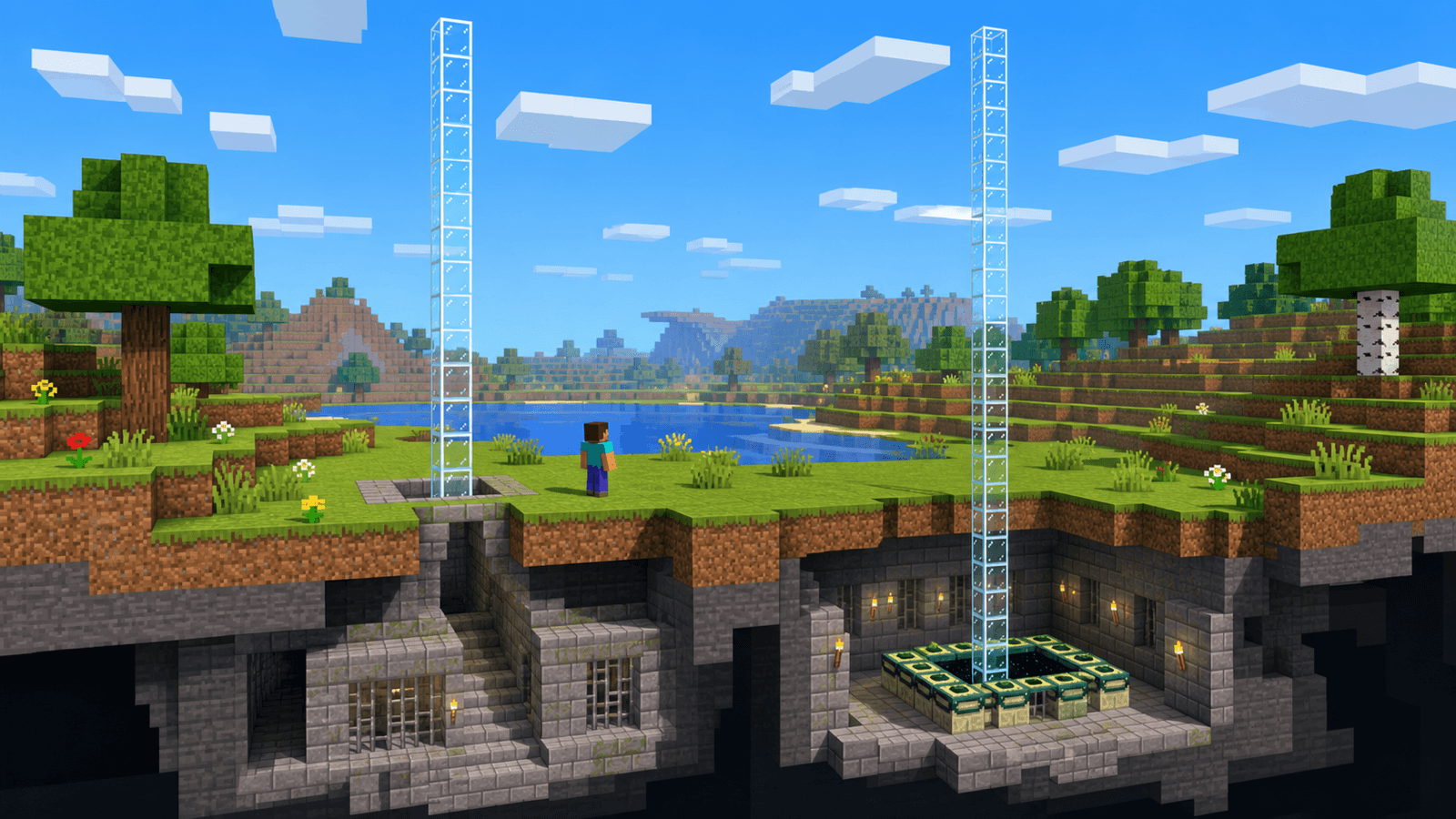
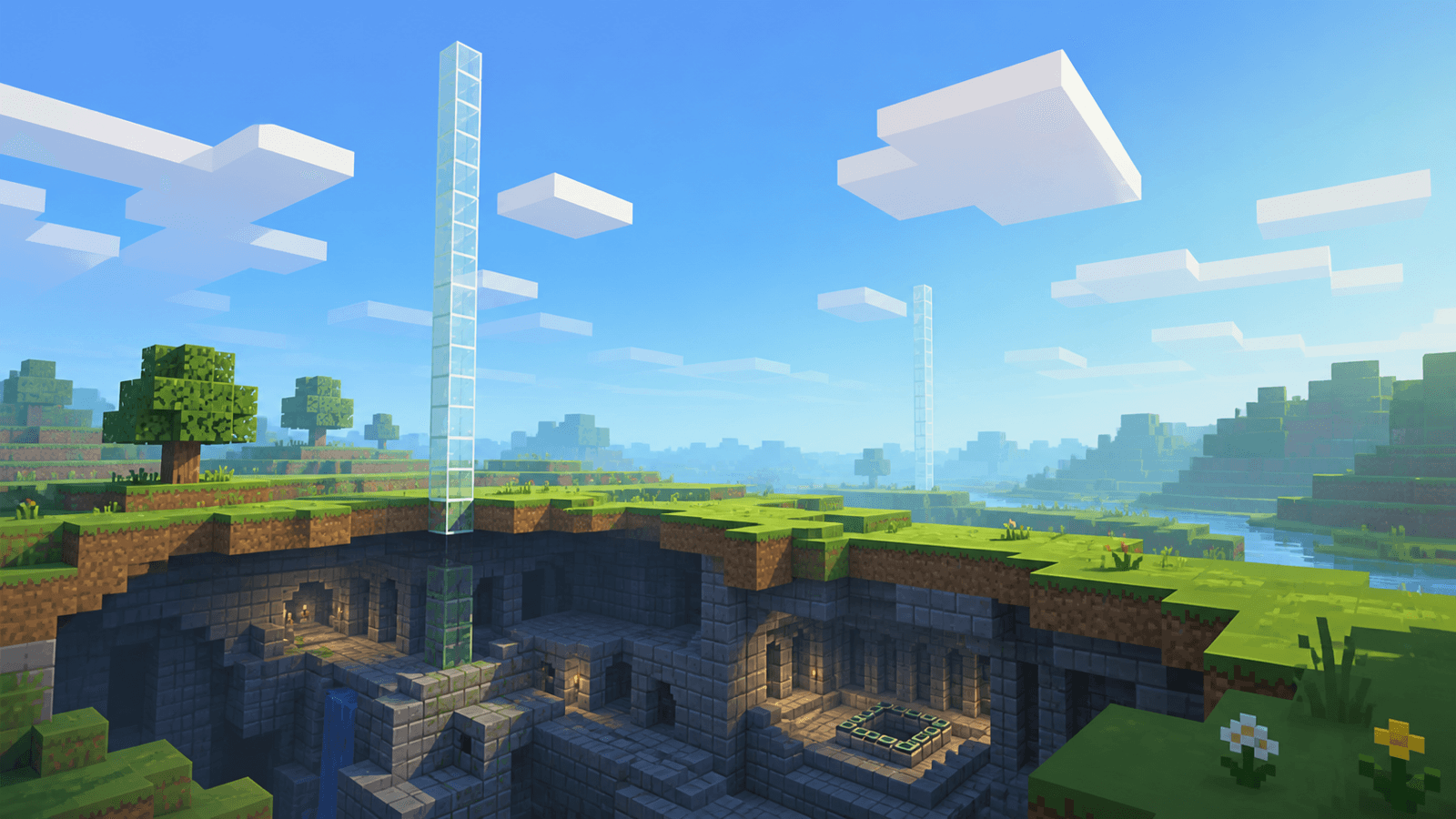
Glass pillars above strongholds look like lore at first glance. They are clean, artificial, and completely unlike the ruined stone-brick maze below them. In screenshots from Beta 1.9 Prerelease 3, they read like beacon shafts before beacons existed: thin columns of glass rising from the stronghold area all the way toward the sky limit.
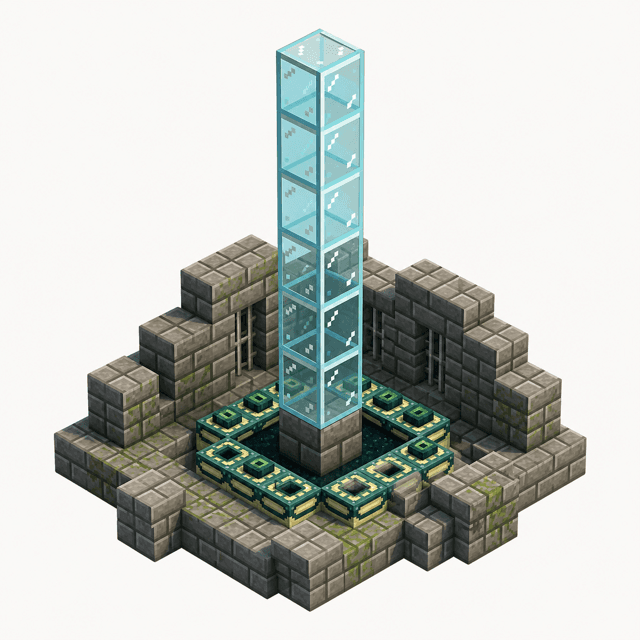
The documented explanation is much plainer. Minecraft Wiki records the towers as a debug feature in Java Edition 1.0.0's Beta 1.9 Prerelease 3 development cycle. The stronghold history page describes a pair of glass towers marking the stronghold start and the portal room, and notes that the feature was removed in Beta 1.9 Prerelease 4. The development-version page for that prerelease also lists 1x1 glass pillars protruding from ground to sky limit at stronghold locations.
That makes the "real purpose" useful because it cuts through the myth. These were not secret monuments, cut lore, a planned surface entrance, or a hidden challenge for players to solve. They were development markers accidentally visible in a public prerelease, left in during the narrow window when strongholds, the portal room, eyes of ender, and the End were still being assembled into the progression chain players know now.
Beta 1.9 made the End route visible for a moment
Official Minecraft's own stronghold retrospective frames strongholds as the gateway to the End: underground ruins containing corridors, libraries, storerooms, monsters, loot, and the portal room. It also notes that strongholds arrived in Beta 1.8, while End portal rooms were added later in the run-up to 1.0. That timing matters. The stronghold was being promoted from an underground ruin into the physical doorway to Minecraft's first ending.
Beta 1.9 Prerelease 3 sat right in that transition. The portal room existed, portal frames could be filled with eyes of ender, and players were encountering new progression pieces before the system had fully settled. A public player question on Arqade from October 2011 captures the confusion well: someone found a glass tower in an unmodded Beta 1.9 Prerelease 3 world and asked whether it was a bug or a feature. The accepted answer pointed back to debug tools left on for spotting strongholds.
Player forum threads from the same day tell the same story from the ground. People saw two huge glass columns, dug down, found stone bricks, silverfish, and portal-room clues, then started speculating about a new dimension. That reaction is exactly why the debug marker could not remain normal gameplay. It made the hidden structure too legible before the End hunt had a chance to work.
Hidden strongholds are part of the vanilla promise
Modern strongholds are not just buildings. They are a pacing device. In Java Edition, strongholds are distributed in rings around the world origin; in Bedrock Edition, they use a different distribution. In both cases, the player-facing route is the same broad idea: make eyes of ender from Ender pearls and blaze powder, throw them, follow their direction, and bring enough extra eyes to activate the portal once the room is found.
That hiddenness is why glass pillars still come up in community conversations. Some players want more visible stronghold entrances, partly because modern structures often connect more clearly to the surface. Others argue that visible entrances would weaken the reward for Nether preparation and eye-of-ender navigation. Even when people disagree about whether strongholds feel outdated, they usually understand that the portal's location is supposed to be earned, not advertised by a sky-high marker.
For vanilla Minecraft servers, that matters more than trivia. A shared End run is often a server milestone: players gather blaze rods, share eyes, cross long distances, mark tunnels, and decide whether the first dragon fight is communal or first-come. A surface glass column would change that social rhythm. It would turn the search from coordinated progression into a visible landmark race.
That is the practical connection to vanilla Minecraft servers on the homepage server list. When a listing uses old screenshots, nostalgic names, or "classic stronghold" language, the useful question is not whether the feature sounds cool. It is whether the server explains which version and mechanics players will actually join.
What glass pillars reveal about server listings
Glass pillars are a good audit tool because they are visually dramatic and mechanically narrow. A current vanilla server should not have them in newly generated terrain. A Beta 1.9 Prerelease 3 world can have them. A modern world can recreate them through commands, datapacks, plugins, or manual builds. A resource pack can make something look older than it is. Those are different promises, even if a screenshot makes them feel like the same nostalgic offer.
This is the same kind of distinction that matters in other Minecraft history posts on the blog. Locked chests were a real April Fools feature, but that does not make every modern chest-protection system vanilla. The Far Lands were real terrain behavior in older versions, but that does not make every far-away wall a preserved historical artifact. Glass pillars sit in that family: real, official, memorable, and still not part of current vanilla server expectations.
The strongest server listings make those distinctions boringly clear. They tell players whether the world is current Java, current Bedrock, old-version survival, semi-vanilla, or a custom nostalgia project. They explain whether screenshots show the live map or a themed render. They say whether End access is normal, delayed, reset, staff-controlled, or event-based.
Better questions than "does it have glass pillars?"
The better question is what the pillars would change if they appeared. Are they naturally generated from an old prerelease jar? Are they staff-built markers for an event? Are they decorative lore around an already-found portal? Are they part of a custom world-generation pack? Are they visible to everyone from day one, or only shown after the server's first dragon fight?
Those questions keep the glass-pillar story useful. The pillars were not a lost stronghold design that modern players are missing. They were a development shortcut that briefly escaped into public play and revealed how much the stronghold depends on secrecy.
For players looking for the best vanilla Minecraft servers, that is the real takeaway. A good server can celebrate old stronghold history, recreate a prerelease curiosity, or stay strictly current. What matters is that the listing tells players which promise they are joining before they spend hours gathering eyes, mapping tunnels, and preparing for the End.