
The Bedrock clue is useful, not guaranteed
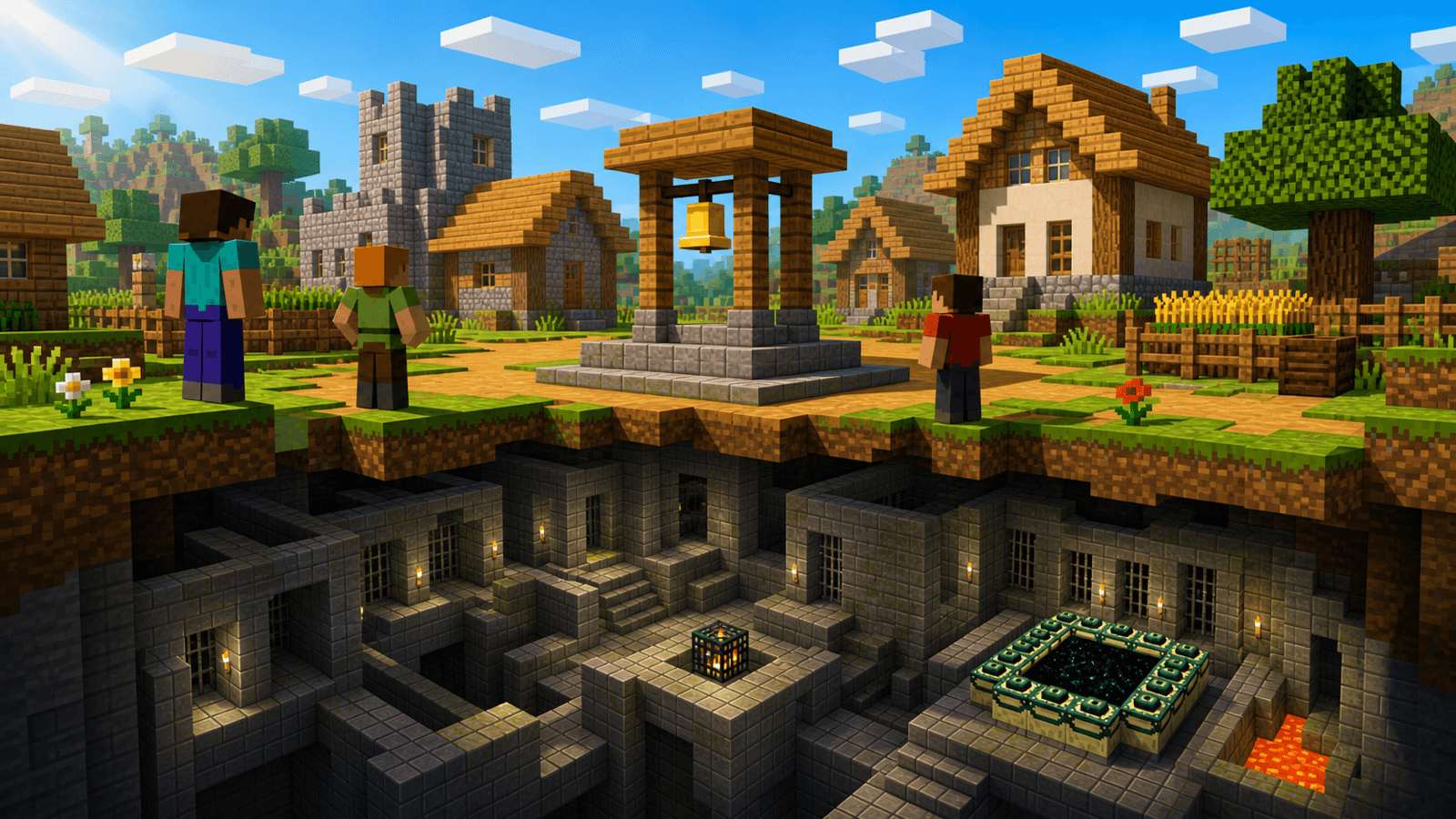
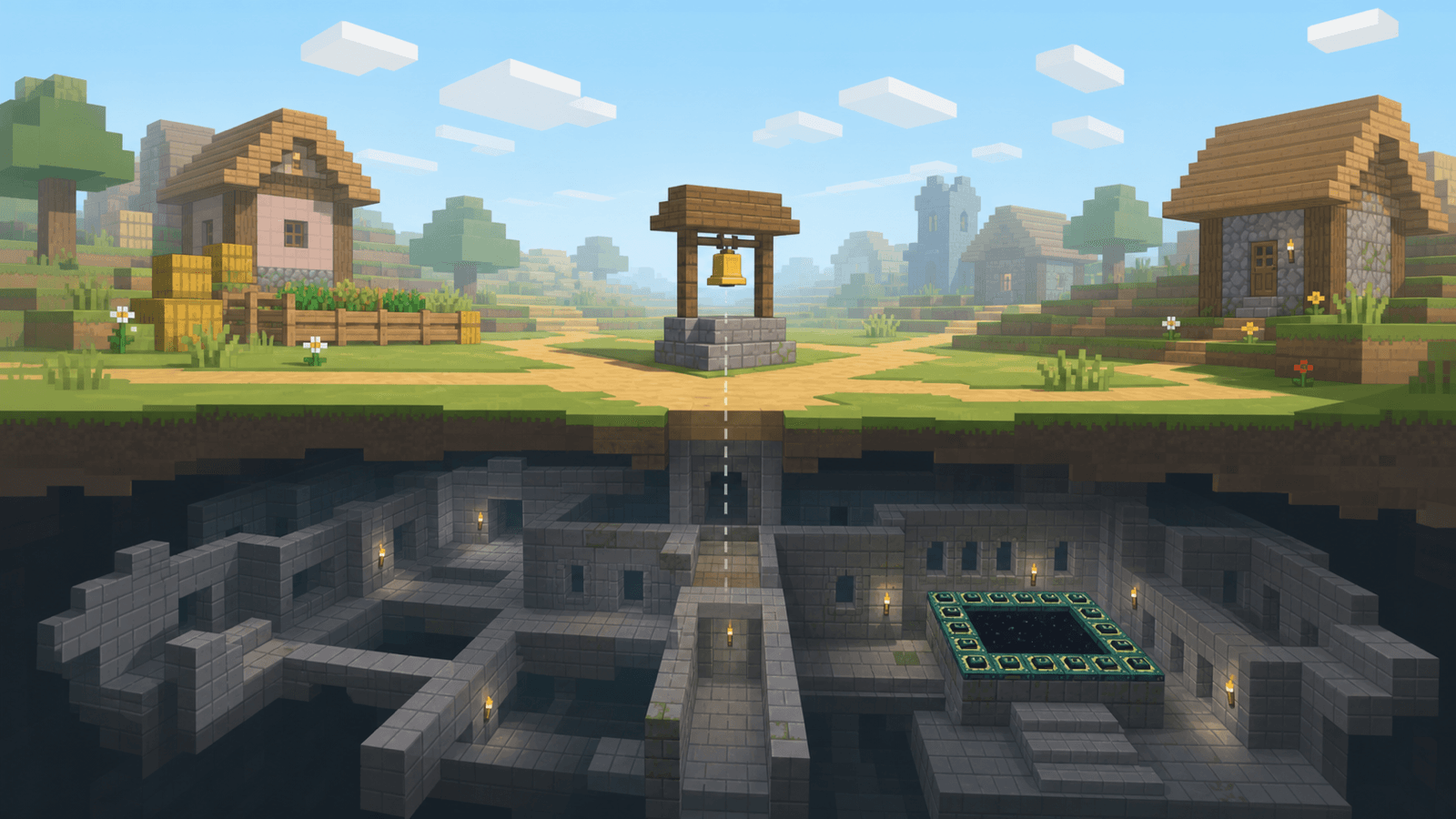
The queued fact is careful for a reason: strongholds attempt to generate under village meeting points in Bedrock Edition. That is different from saying every meeting point has one, every bell is a marker, or every stronghold will be easy to read from the surface. Minecraft Wiki's stronghold notes still describe strongholds as underground structures and the only natural home of an end portal, with eyes of ender as the normal locating tool. The village clue adds context. It does not replace the whole search.
That distinction matters on a vanilla SMP because multiplayer turns guesses into group plans. One player says "dig under the bell," another brings ladders, someone else burns the only spare eyes, and a simple test becomes the evening's main expedition. If the group treats the clue as probability and edition-specific behavior, it helps. If the group treats it as a promise, it creates frustration.
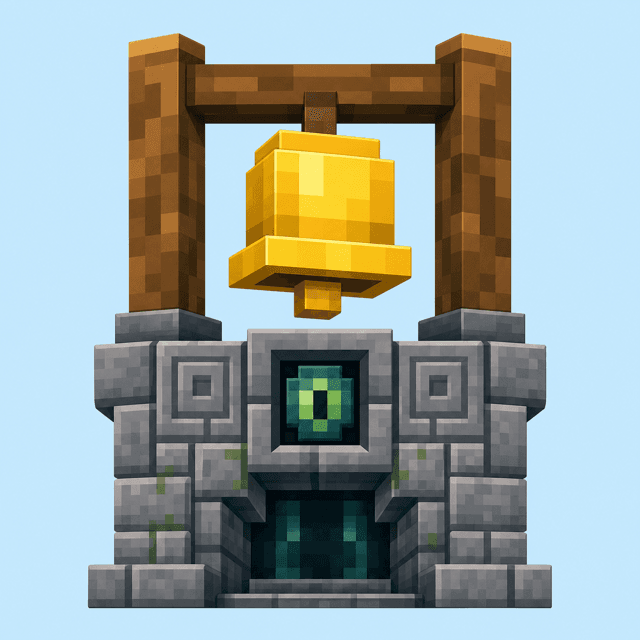
The history also explains why older advice can sound slightly off. Bedrock's stronghold relationship used to be discussed around village wells, but later Bedrock notes moved the common reference point toward village meeting points. Since bells usually generate near the center meeting area of a village, player shorthand often becomes "check the bell." That shorthand is handy, but the actual idea is the village center, not a magic bell block.
Why the meeting point changes route planning
A meeting point is where a village gathers around its center logic, and the bell is the visible object many players notice first. Minecraft Wiki's village and bell pages both make that center role plain enough for survival planning: the village style and center matter, and bells commonly sit near the meeting point. For a Bedrock group looking for the End, that turns villages from scenery into scouting landmarks.
On a solo world, you can test that quietly. On a minecraft SMP, it becomes shared logistics. Players need to decide who brings eyes of ender, who marks the village, who digs safely, who posts coordinates, and whether the discovered stronghold is public, reserved for a dragon run, or part of a server-wide route. The generation clue is only the first step. The social rule around the clue is what keeps the world from becoming noisy.
That is one of the most practical questions to ask when comparing vanilla SMP options on the homepage server list. "Can Bedrock players join?" and "does the world use Bedrock generation?" are different claims. A listing that explains the difference gives players much better expectations before they commit to a long survival world.
Where SMP groups usually get misled
Community discussions show the same failure pattern again and again. Players see a bell sitting low, remember that Bedrock strongholds can be under villages, dig straight down, and sometimes find nothing. Other players follow eyes of ender to a confusing spot, open a wide hole, and assume the game broke because the portal room is not where they expected. Bedrock also has its own stronghold quirks: generation begins from a staircase, and rare strongholds can be awkward or even lack the portal room players were expecting.
That does not make the village clue useless. It means the clue needs a process. Throw the eye near the village instead of only trusting the surface shape. Mark the meeting point, but also check nearby terrain and the exact direction of the eye. Dig with safety shafts, water, blocks, and a second exit. If the first search produces odd corridors or no portal room, do not immediately accuse the server of bad moderation, seed manipulation, or missing content.
Those steps sound basic, but they protect the mood of a long-running vanilla SMP. Stronghold hunts often happen at the point where casual survival becomes server-wide progression. If the first End route is chaotic, new players remember the confusion more than the discovery.
Edition clarity matters more than the trivia
This fact also exposes a common server-selection problem: "Bedrock support" is not the same thing as "Bedrock Edition server." Some Java-based communities let Bedrock clients connect through compatibility layers. That can be useful, but it also means world generation, combat details, redstone behavior, and bug handling may still be Java-centered.
Peaceful Vanilla Club is a useful example only because its own wiki is explicit. It describes the server as Java based while allowing Bedrock players to join through Geyser, and it maintains Bedrock-specific bug guidance for that setup. That kind of clarity is exactly what players should look for. It tells a Bedrock player what is welcome, what is experimental, and where vanilla mechanics may not match a pure Bedrock survival world.
For stronghold planning, the distinction is direct. If a server is Java generated, the Bedrock village-meeting-point clue is background trivia, not a reliable route. If a server is truly Bedrock generated, the clue can shape early End planning. If the server is crossplay, ask which side owns the world rules before organizing the dig.
This is why mechanics-first articles belong in a server guide, not just a trivia feed. Small edition differences change player expectations. The best vanilla SMP for a Bedrock player is not always the one with the flashiest crossplay claim; it is the one that explains what rules actually govern the shared world.
Use the clue as a better server filter
When you compare vanilla Minecraft servers, use this stronghold fact as a filter for clarity. Does the listing explain Java, Bedrock, or crossplay honestly? Does it tell players how the End is handled after the first dragon fight? Are strongholds public routes, protected discoveries, or community projects? Are eyes of ender, coordinates, and portal-room access treated as shared planning or private advantage?
Those questions are more useful than asking whether a server has "good strongholds." A good vanilla SMP can make the End feel earned in several ways: careful route marking, transparent reset policy, fair dragon-run etiquette, and clear edition support. A weak listing leaves players to infer all of that from a vague promise that Bedrock players can join.
The blog is useful for more structure and mechanics breakdowns, but the joining lesson is simple. Bedrock Edition's village-meeting-point clue can save time when it applies, waste time when it is overstated, and reveal whether a server explains itself well. Choose a vanilla SMP where players can turn small mechanics into shared knowledge instead of arguments in chat.