
Hidden rooms are real, and many players still miss them
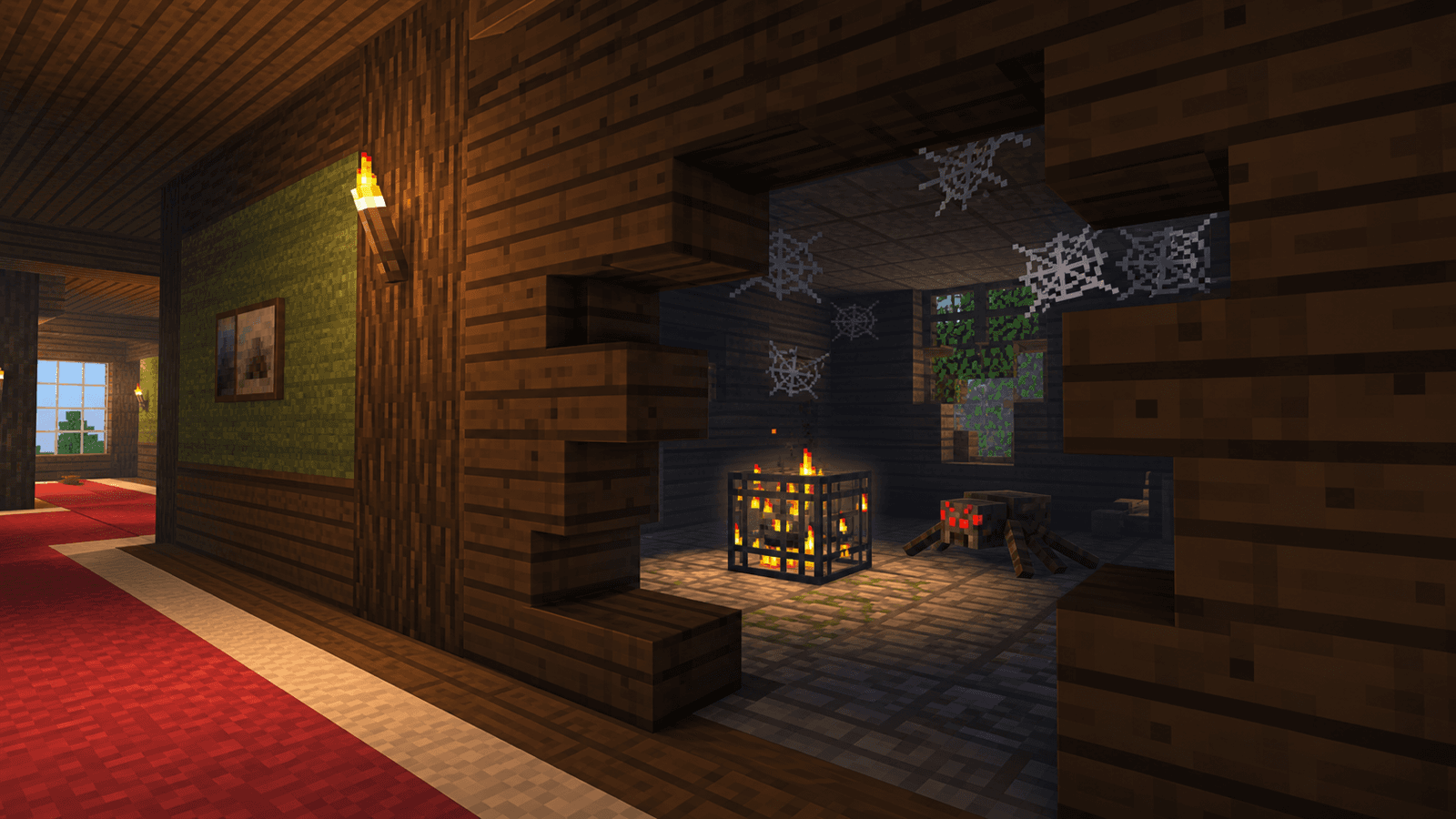
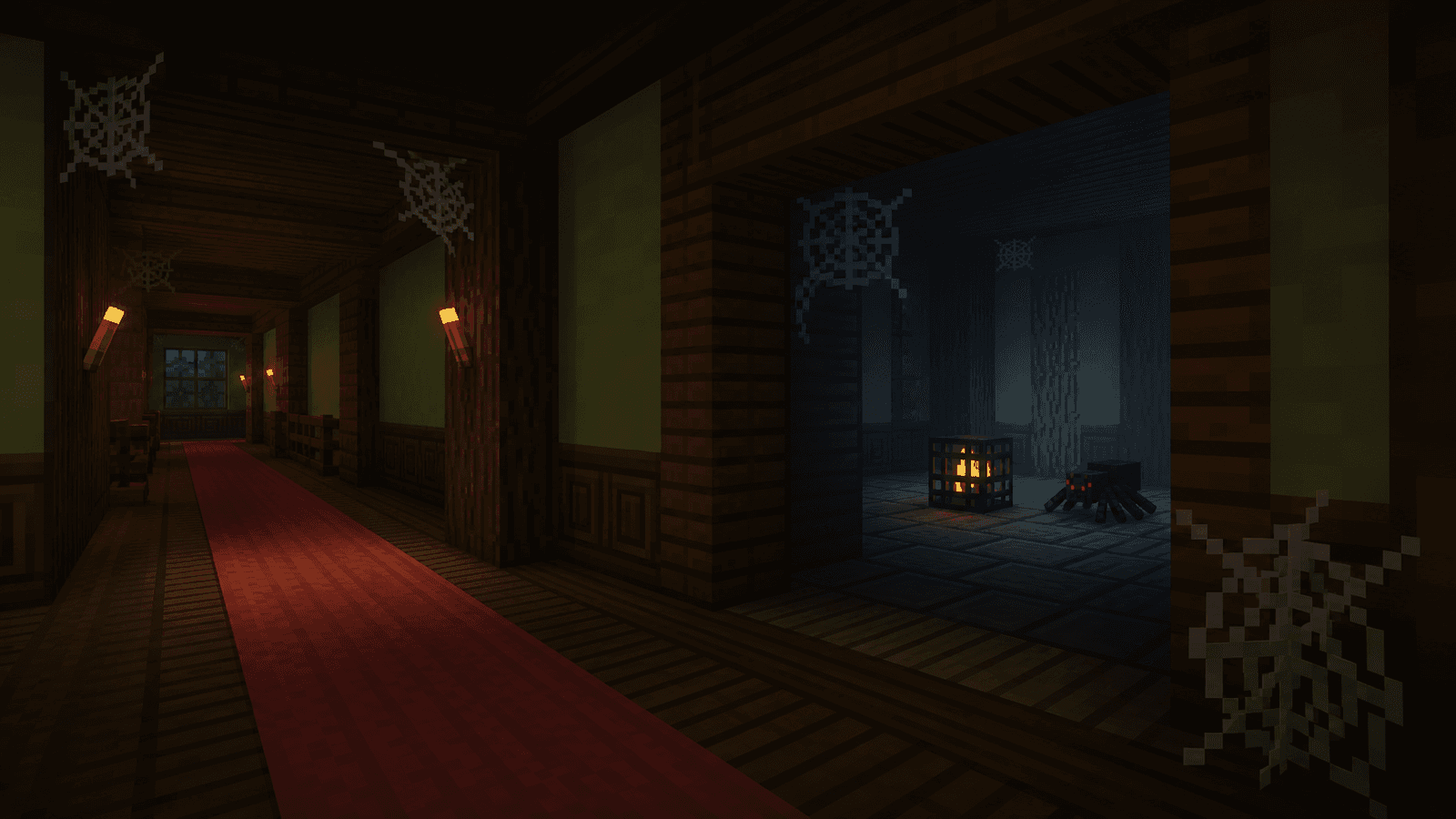
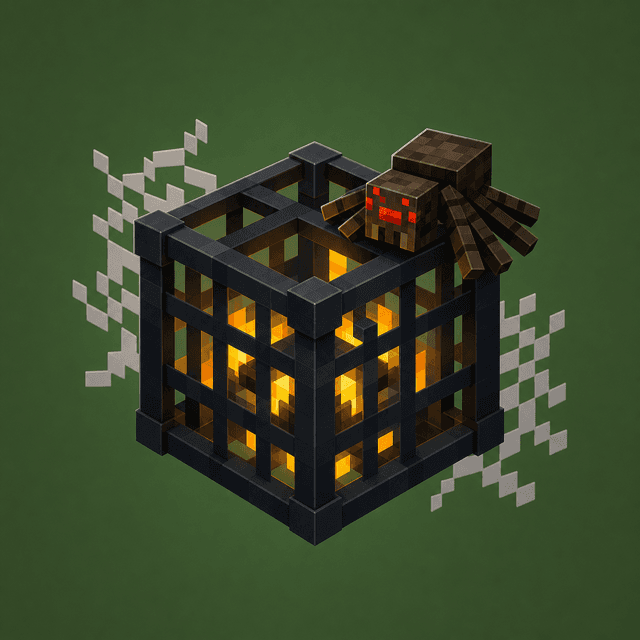
The source fact is straightforward: woodland mansions can generate secret rooms, and one of those secret rooms is the spider room with a spider spawner in the center. Minecraft Wiki also notes two details that matter in practice. First, not every mansion gets every room because the layout is randomized. Second, secret rooms can have no entrance at all, which is why players miss them even after they think they have cleared the obvious hallways.
That matches how real players talk about the structure. In a recent Reddit thread, one player posted a spider spawner found inside a mansion and said they had "never seen anyone talk about it." Other replies pointed them back to the secret-room list. A five-year-old r/Minecraft thread reads the same way in miniature: someone found the room, asked if it was normal, and got a mix of surprise, correction, and wiki citations in response. The fact is established, but it still feels secret in ordinary play.
That matters for vanilla Minecraft servers because mansions are exactly the sort of structure people tend to summarize too quickly. Players know about evokers, vindicators, allays, and totems, so they assume the mansion is already fully understood. The spider room breaks that assumption. It rewards players who listen for mobs behind walls, look for gaps in the layout, and treat the building like a generated puzzle rather than a checklist.
Why the detail matters more on long-travel servers
Minecraft Wiki says woodland mansions usually generate thousands of blocks from spawn and are commonly found through woodland explorer maps from cartographer villagers. That means the spider-room fact is attached to a structure that already costs time. You are not learning a curiosity about a village two minutes from spawn. You are learning something about a destination that often takes real preparation, map reading, and travel infrastructure.
Community discussion reflects that too. In a recent "is the mansion worth it?" thread, one player said yes, but mostly for the exploration itself, the secret rooms, and the possibility of turning the mansion into a base rather than for pure loot efficiency. A Minecraft Forum user went even further and described a long-term rail project connecting a woodland mansion base back to their main base. That is the right frame for this article: the mansion is not just a combat site, it is a travel commitment that can become part of a world's long-term geography.
On strong vanilla Minecraft servers, that distinction matters. If the world is old but well-kept, a mansion can still feel like a faraway objective worth organizing around. If the world is chaotic, a mansion is more likely to become another stripped shell someone reached first, emptied, and never documented. When you compare best vanilla Minecraft servers, rare structures are one of the clearest ways to tell which kind of world you are entering.
A hidden spawner changes how groups clear or reuse the mansion
The spider room matters most when players stop treating the mansion like a one-pass raid. Minecraft Wiki notes that vindicators and evokers do not respawn once killed, but it also points out that the building is dark enough for ordinary Overworld mobs to appear. A secret spider spawner adds one more source of pressure, and unlike the mansion's named illagers, it can keep mattering after the dramatic fight is over.
That shows up clearly in player advice. In a Reddit thread about moving into a woodland mansion, one commenter said their server had used a mansion as a base and that the special mansion mobs did not respawn, while problems mostly came from lighting and the occasional spawner. Another commenter recommended hiding torches under carpets to secure the building without rebuilding it beyond recognition. In a different thread, a player preparing to explore their first mansion was told to set a bed well outside, watch for secret rooms, and use roof or window sightlines to spot hidden loot spaces.
Taken together, those comments point to a more grounded multiplayer lesson than "spiders are scary." A secret spider spawner changes pacing. One player can fight. Another can light, block doorways, or mark cleared wings. Someone else can carry backup beds and food. On a vanilla SMP, that makes the mansion a useful social test because it rewards preparation and communication more than raw gear alone.
What to check before choosing a server
The best vanilla Minecraft servers do not make every mansion easy. They make mansion exploration understandable. That means players can usually tell whether routes exist, whether rare structures are shared knowledge or private property, and whether old discoveries are preserved well enough that a newer player still has something real to explore.
That is where server culture matters as much as generation. Do players leave signs, nether routes, or rough travel notes for long-distance structures? Are mansions immediately claimed and stripped, or do they become bases, projects, or landmarks? Are explorer-map destinations still useful on this world, or does the server have quirks a new player needs to learn first?
On very old worlds, even the map tools can become server-specific. Peaceful Vanilla Club is a good example of that kind of long-running-world caveat: its local wiki notes that cartographer maps are not always reliable there because terrain has been manually generated over the years. That is the sort of subtle exploration note that tells you a server has real history. It is also why a detail page like Peaceful Vanilla Club can be more useful than a generic listing when you are comparing exploration-heavy communities.
The same idea applies across the rest of the site. The blog is useful because it connects structure details, update habits, village health, and server culture into one broader question: does this world still make vanilla knowledge worth learning?
The practical read for players
The spider-room fact is useful because it teaches restraint. Woodland mansions are big enough, rare enough, and messy enough that players want to simplify them into one slogan: worth it, not worth it, loot it, burn it, base there, ignore it. The hidden spider spawner is a reminder that vanilla structures are often richer than that. A mansion may contain more than the rooms you can see on the first pass, and the server around it may contain more than the tagline on the listing page.
If you are choosing a world, look for the one where rare structures still create group planning instead of cleanup after someone else's speedrun. If you are already on a world, use the mansion as a test: are players willing to build routes, share hard-earned knowledge, and preserve the structure well enough that the next person can still experience it?
That is the real lesson behind woodland mansion spider spawner vanilla minecraft servers. The spider itself is ordinary. The context is not. On a good vanilla server or careful vanilla SMP, a hidden room inside a faraway mansion becomes exactly what Minecraft is good at: a small mechanical fact that turns into a better story because the world around it is alive.